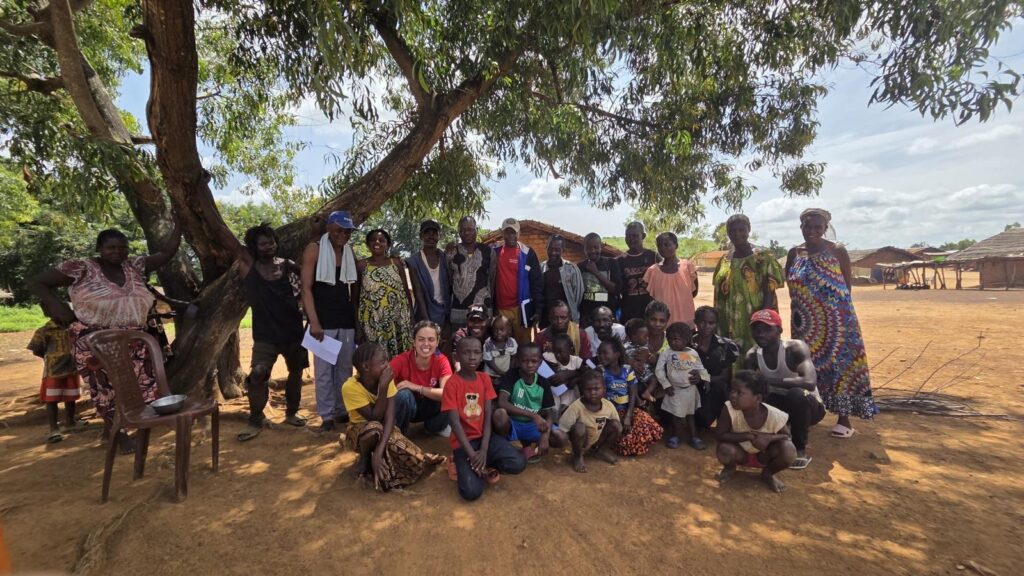
Thoughts on Congo
I can’t find the words to begin, and yet there is so much to say…
Congo has had a strange effect on me: it has overwhelmed me, shocked me, raised a thousand questions, often saddened me, but at the same time it has welcomed me as if it had always been my home.
The Democratic Republic of the Congo is not an easy country, nor is it a place you come to “go on vacation.” Congo absorbs you, pulls you out of your “bubble,” throws injustices in your face, and makes you feel small, powerless, useless, incapable of improving things—even just a little. It is certainly a country that does not leave you indifferent or passive.
It is a country in Central Africa, in the very heart of the continent, and here all the contradictions of the world seem to be concentrated. It is an extremely rich country—one of the richest in terms of resources: enormous water resources, yet safe drinking water is lacking everywhere; immense mineral wealth, systematically looted by foreign countries and multinational corporations, which becomes the country’s main “curse” and the cause of instability and conflict in the eastern regions; an infinite human capital that is prevented from shining, and that today belongs to some of the poorest populations in the world. It is the epicenter of contradictions—but also of corruption.
We barely even step out of the airport before realizing it: at the yellow fever vaccination check, problems are invented that could have been “resolved” with 60 dollars. I refuse to pay and manage to slip away. But corruption is visible everywhere, even on the streets: the police stop you to ask for “mayi” — water — which is actually code for asking for money.
The state is sustained by widespread impunity: historically as well, those responsible for serious massacres of civilians in the eastern part of the country have been integrated into the army and into government ministries. The message is clear: those who do not respect the law are not punished, and this fuels an endless cycle of violence.
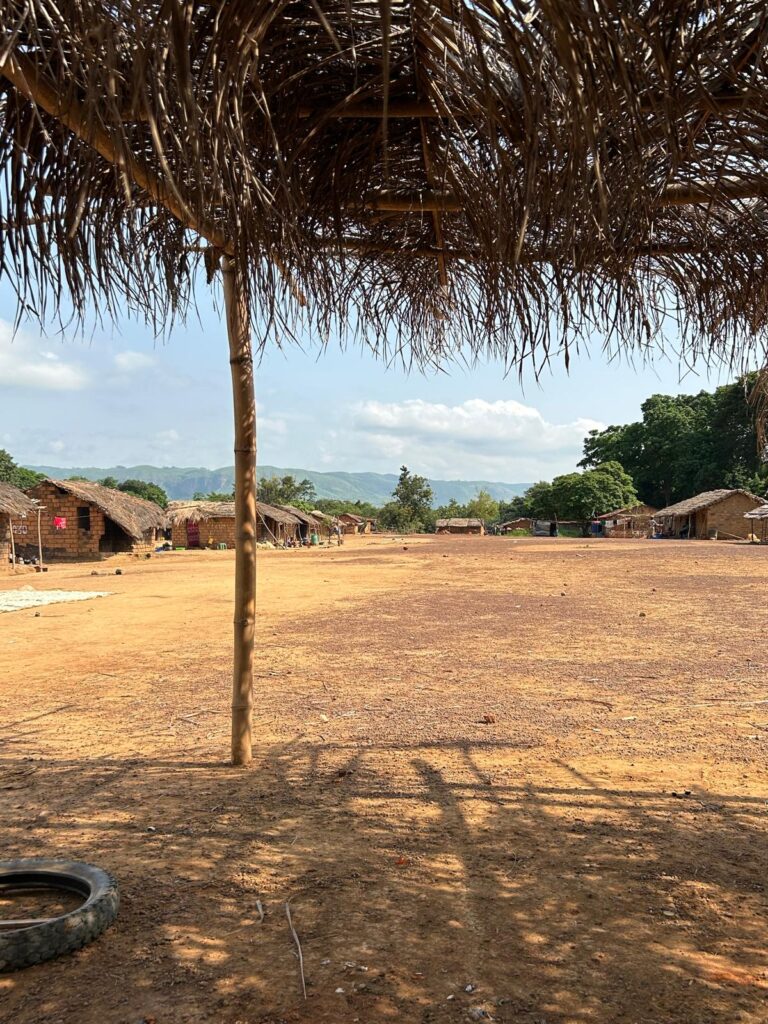
It is also an immense country, where I have only just set foot, and I will therefore limit myself to speaking about the impressions I had in Kinshasa, the capital—well aware that everything changes from city to city and from province to province.

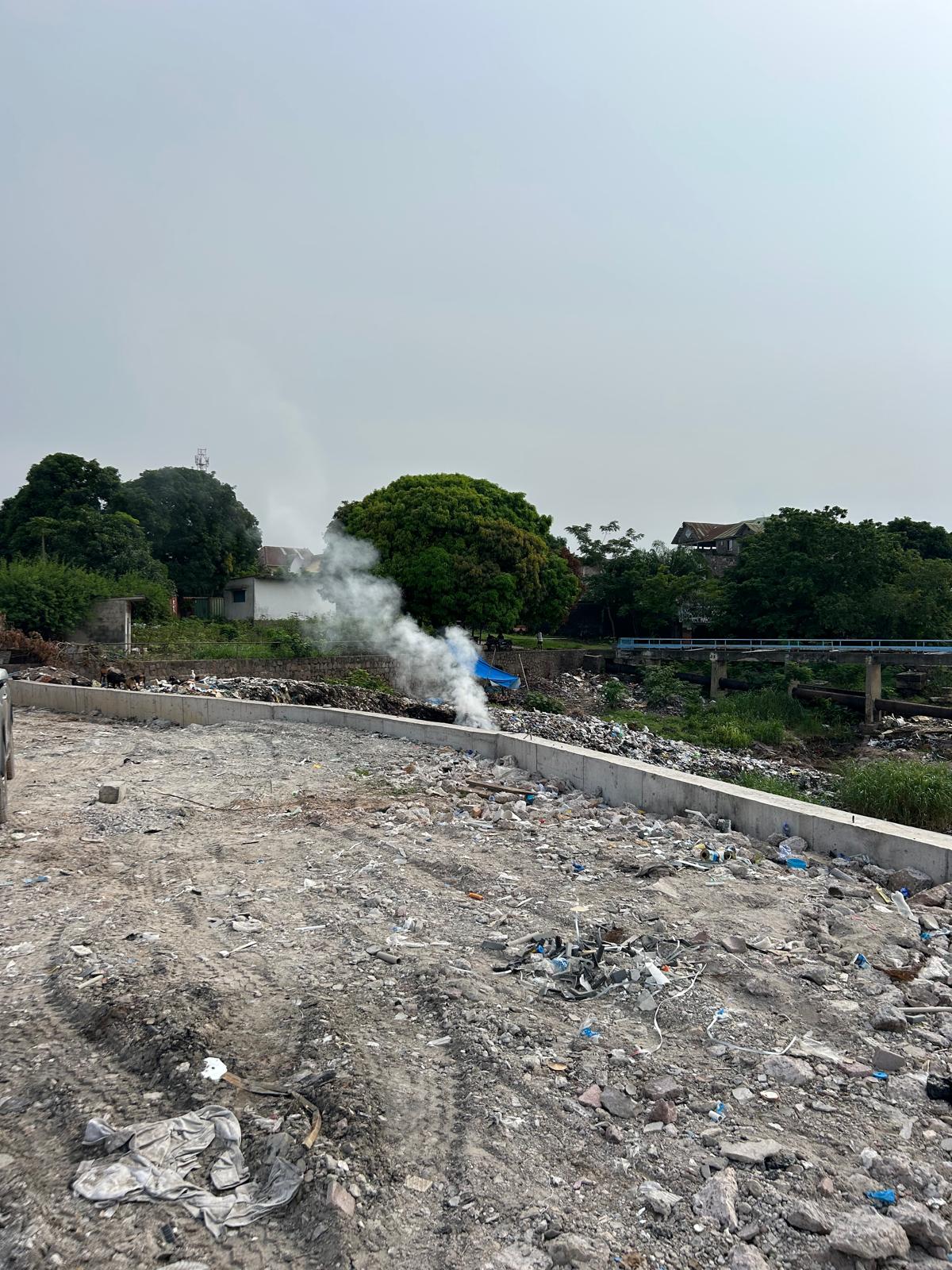
One of the most shocking things is the dirt in the streets. The water is not drinkable, and enormous amounts of plastic bottles are used, which are then thrown into rivers or onto the streets. There are clothes, flip-flops, tires everywhere. There is no waste management system: everything is burned in the open air, and people live breathing polluted air that will likely cause who knows what diseases tomorrow.
Another huge problem is traffic: trucks, motorcycles, and often very old cars that pollute with black, toxic fumes. In Kinshasa’s traffic jams, you can remain stuck for hours, with no way out. The first thing I think about is ambulances: if there were an emergency, how could they possibly get through? How many lives could be saved?
Here, mortality is high. People die for absurd reasons. Healthcare is entirely paid for: to receive treatment—even in emergencies—you must first prove that you can pay. Do money and profit count more than life? This thought makes me angry and breaks my heart. I hear stories of people who have lost young children or parents because they knew they could not afford medical care. The value of life is the same everywhere, for every human being. So why do people die so casually here? Why do I have the feeling that life has less value, and that people have even grown used to the death of children?
What I feel is that there is a lack of love for the people. The wealth exists, but it is terribly mismanaged and always ends up in the pockets of a few in power. Why do millions and millions disappear without being used for the population? All you have to do is walk through the streets of the capital to see the inhumane conditions in which people live. Anyone’s heart would break at the sight of all those children dressed in rags, begging for alms or simply for water.
One day we went to the hospital in Kinshasa for medical check-ups required for our work visa. As we were leaving, three children ran toward us saying, “Mundele, na za na nzala” — “white person, I’m hungry.” We see many children like this, but I will never get used to it—and I don’t want to.
Their faces look tired, their clothes are torn, yet there is an incredible light in their eyes. I wish I could get to know them, hear their stories.
In these situations, I never know how to behave: on the one hand, it feels wrong to reinforce the stereotypical image of the white person who arrives and brings money or things; on the other hand, it feels inhumane to turn away from a child who is simply asking for food.
So we gave them bread and water, but what I truly wanted was to stay with them.
In the meantime, their friends arrive too: from three children they quickly become about ten. We sit down on a low wall. In Lingala I would say: Na za na esengo — I am in joy. We talk, they ask me countless questions about Italy and my family, and then, inevitably, football comes up. They dream of becoming football players. We laugh, and they laugh when I speak Lingala. They have sunshine in their smiles and the whole world in their eyes.
Some are orphans, others have run away from home, and others were thrown out after being accused of witchcraft. But the truth is that their parents are simply unable to take care of them.
Then it’s time to leave. We hug tightly; they ask me to take them with me, to stay together forever. My heart melts. I truly wish I could, but there are so many of them. I feel powerless.
I get into the car and, when the driver starts the engine, they secretly climb into the open back of the truck. I burst out laughing, and they laugh with me. They blow kisses, make heart shapes with their hands, trying not to be seen by the driver. For a moment, it felt like they were simply children again, like all the others, forgetting their problems. On était ensemble — and that was the beautiful part.
Then the driver notices, and they climb down. We say a real goodbye. And as I watch them walk away, tears roll down my face. I don’t even know which emotion they come from: sadness, anger, resignation—but also hope, love, joy. Maybe a mixture of everything.
Beyond the emotional aspect, life here truly tests anyone who is used to “comfort.” Here, those comforts simply don’t exist: electricity is often unavailable, cooking is done over charcoal, there’s no power to charge your phone, no drinkable water, the internet connection is slow, and the roads flood when it rains.
And yet, inexplicably, in the middle of all this, there is something that makes me feel good. That makes me feel at peace. At home.
How is it possible, in the middle of all this chaos?
No country has ever welcomed me with so much love, warmth, and joy. There is something here that fills my heart.
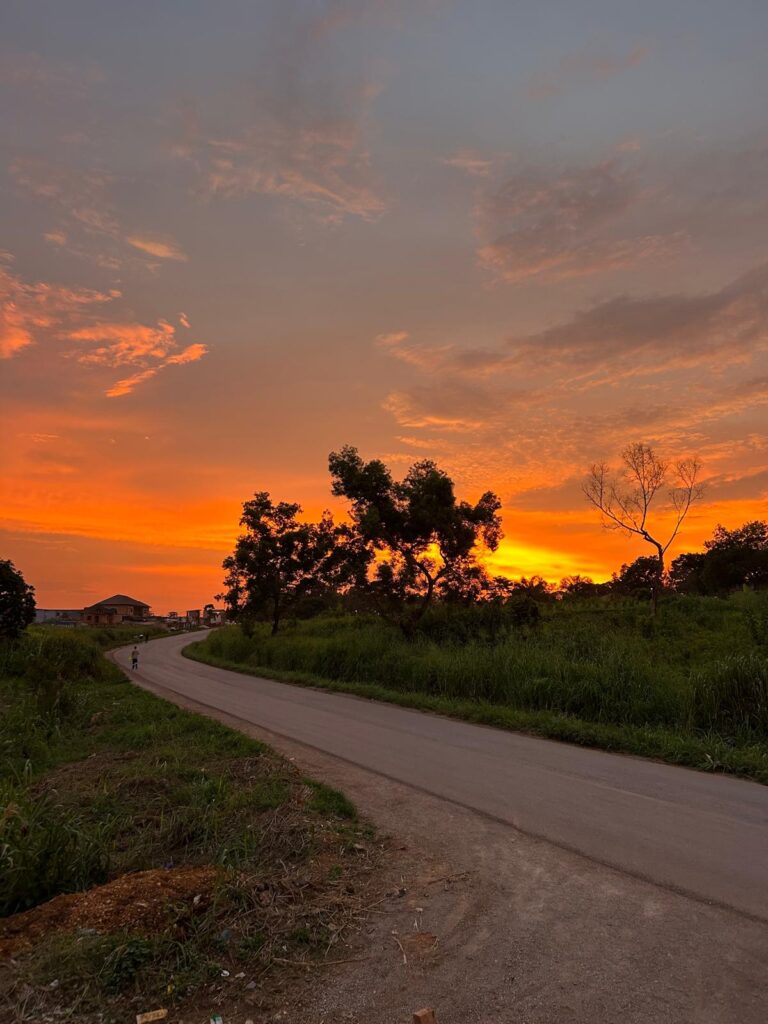
Maybe it’s time itself, which seems to move more slowly. There is less frenzy, more space for people. Maybe it’s the climate—the heat, the sun—how much I had missed them in Denmark. My body feels like it has found its natural habitat again.
Maybe it’s the landscapes: the nature, the palm trees, green everywhere, the red earth instead of gray concrete.
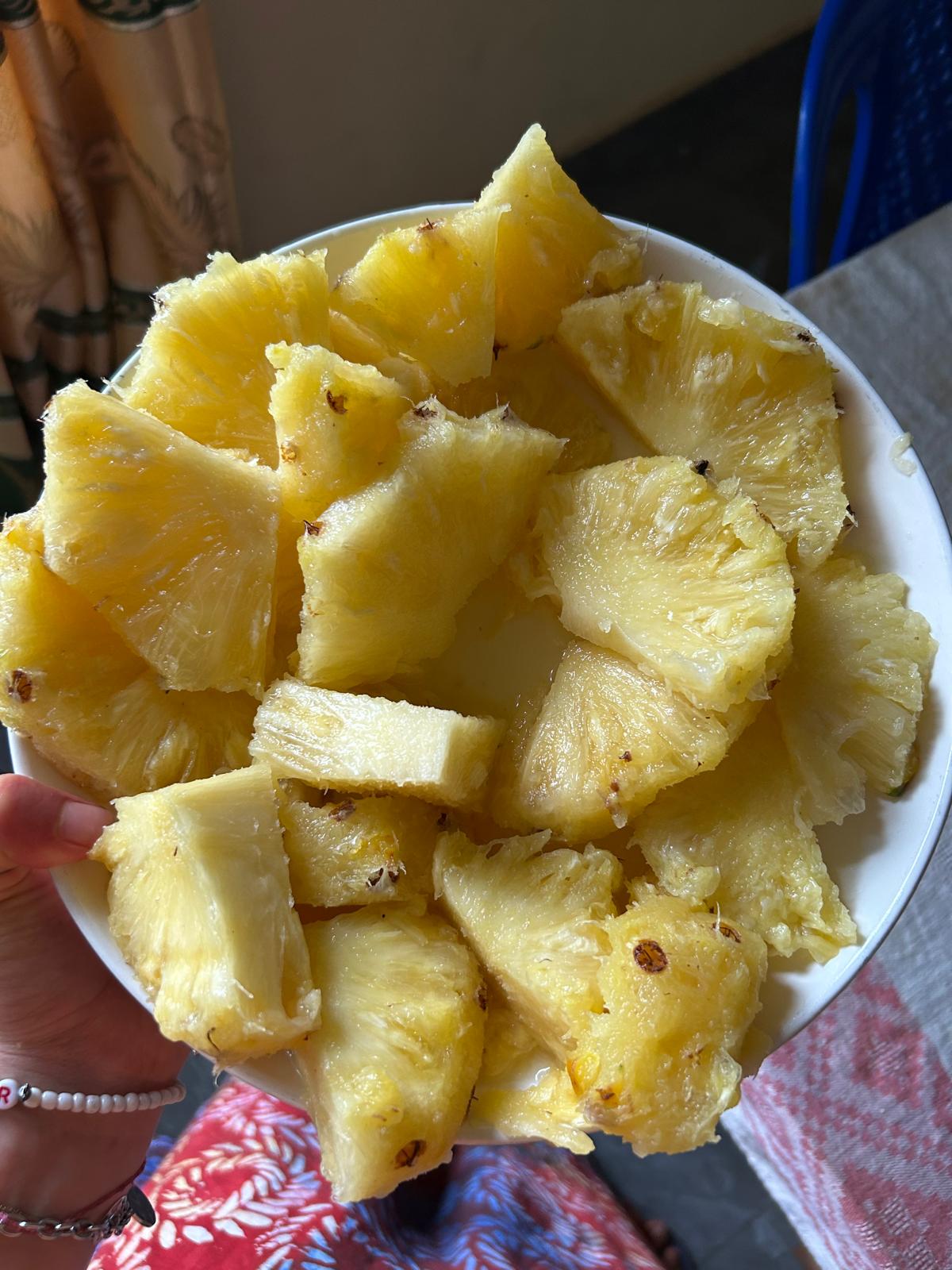
Maybe it’s the taste of the fruit: pineapple, mango, watermelon, passion fruit… how can everything be so good it moves you to tears?
But deep down, I know: the magic that makes me feel good is the people. The ambiance africaine.
There is music everywhere here, and Congolese music is always capable of lifting your mood.
And then there’s how much I laugh. If I had to describe Africa with one word, I would say: creative. Where resources are lacking, ideas, solutions, and imagination overflow. People make do with what they have: children who know how to fix anything and invent games, improbable vehicles that somehow keep running, every day a new surprise.
Every time I leave the house, I know something absurd and funny will happen. Once I saw two people and three pigs on a motorcycle. This morning, a bus with a little goat on the roof. People riding in the open trunk of cars, others sleeping on trucks.
I step out onto the street and people call me by name: “Martina, bonjour, ça va?” — and I’m surprised, because that doesn’t even happen to me in Turin. I go to the market to buy tomatoes and two and a half hours pass, because it’s just too beautiful to stop and talk with people.
In Africa, people have a superpower: they make you feel welcomed and loved.
It happens that vendors leave their stalls to walk with me and help me find what I need, guiding me through the market. I receive so much kindness and so many smiles that it’s hard to even imagine.
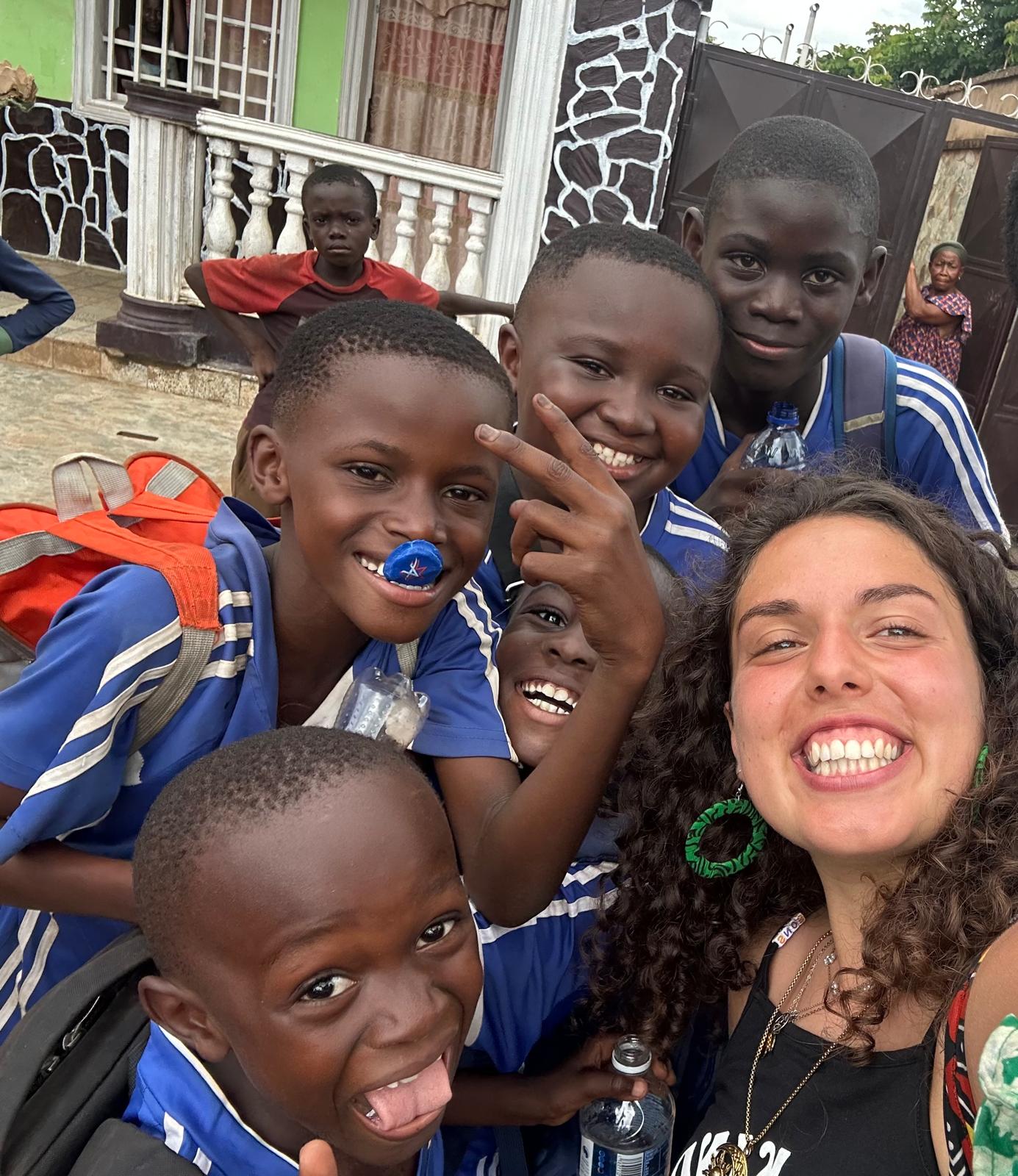
And then there are the children. Everywhere. At home, in the streets, in church, in the villages. And so we are surrounded by love and joy.
Maybe they don’t know it, but they are forces of nature: intelligent, curious, brave, affectionate. They brighten my days without even realizing it.
They look at me with curiosity; sometimes they touch my hair or my skin, other times they greet me and smile, and sometimes they fill me with hugs. Then we start playing: I stick out my tongue, they do the same; I jump, they jump; then more children arrive and the street turns into a circus.
Sometimes we don’t even speak the same language, but we understand each other perfectly through the universal language of play, music, and laughter.
How can a land give you so much? How can it welcome you with such strength? How can it make you feel at home in such a short time, despite all the problems?
These are some of the questions I carry within me.
But along with the questions, the answers are beginning to arrive: I am starting to understand why that little voice in my heart pushed me all the way here.
Now it’s time to go,
See you soon,
Marty 🌻🧡